Q1: What is chia seed powder mainly used for in modern food innovation?
A: Chia seed powder is used as a clean-label fibre ingredient to improve nutritional value while supporting texture, stability, and mouthfeel in bakery, beverages, and plant-based foods.
Q2: Why is particle size important when using chia seed powder in food formulations?
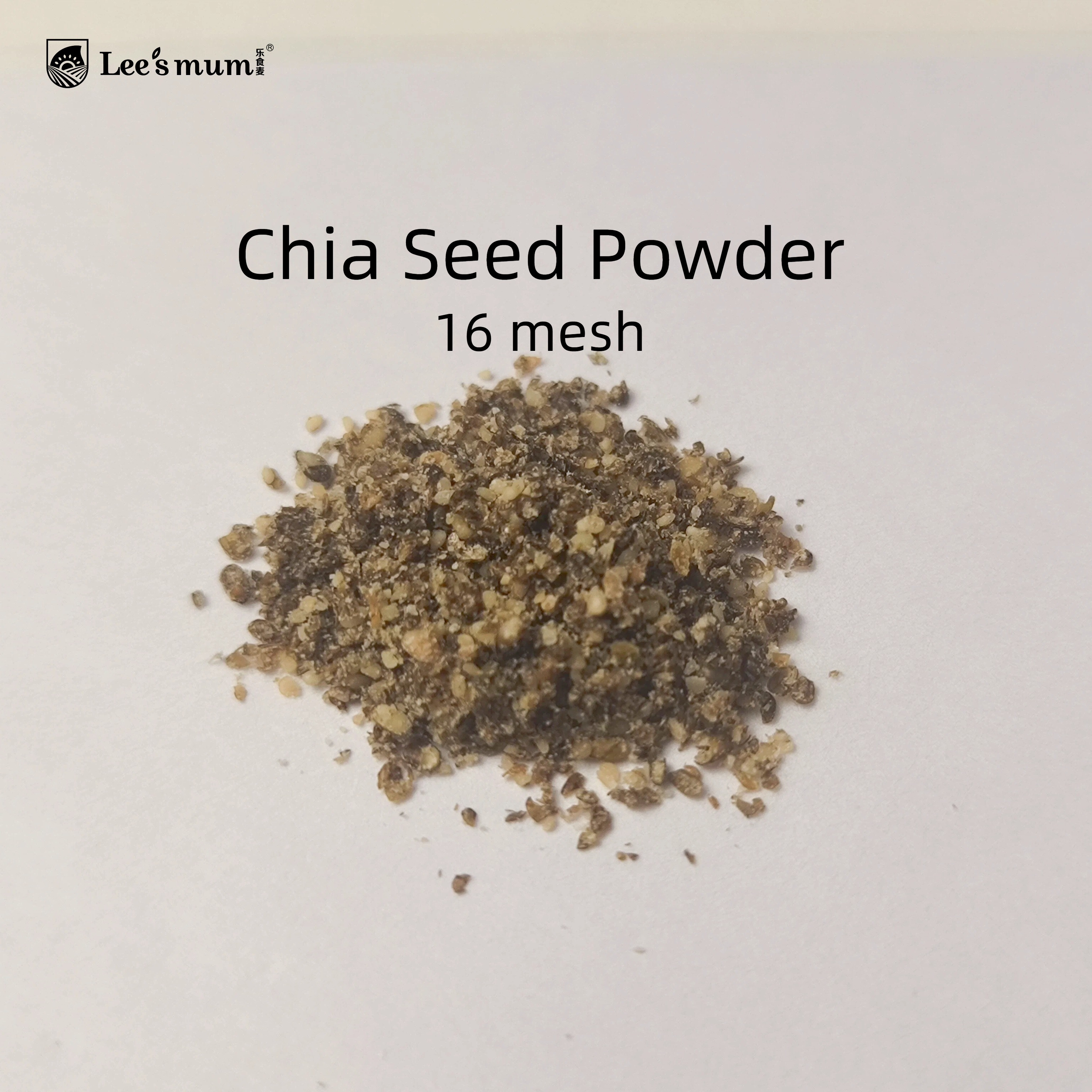
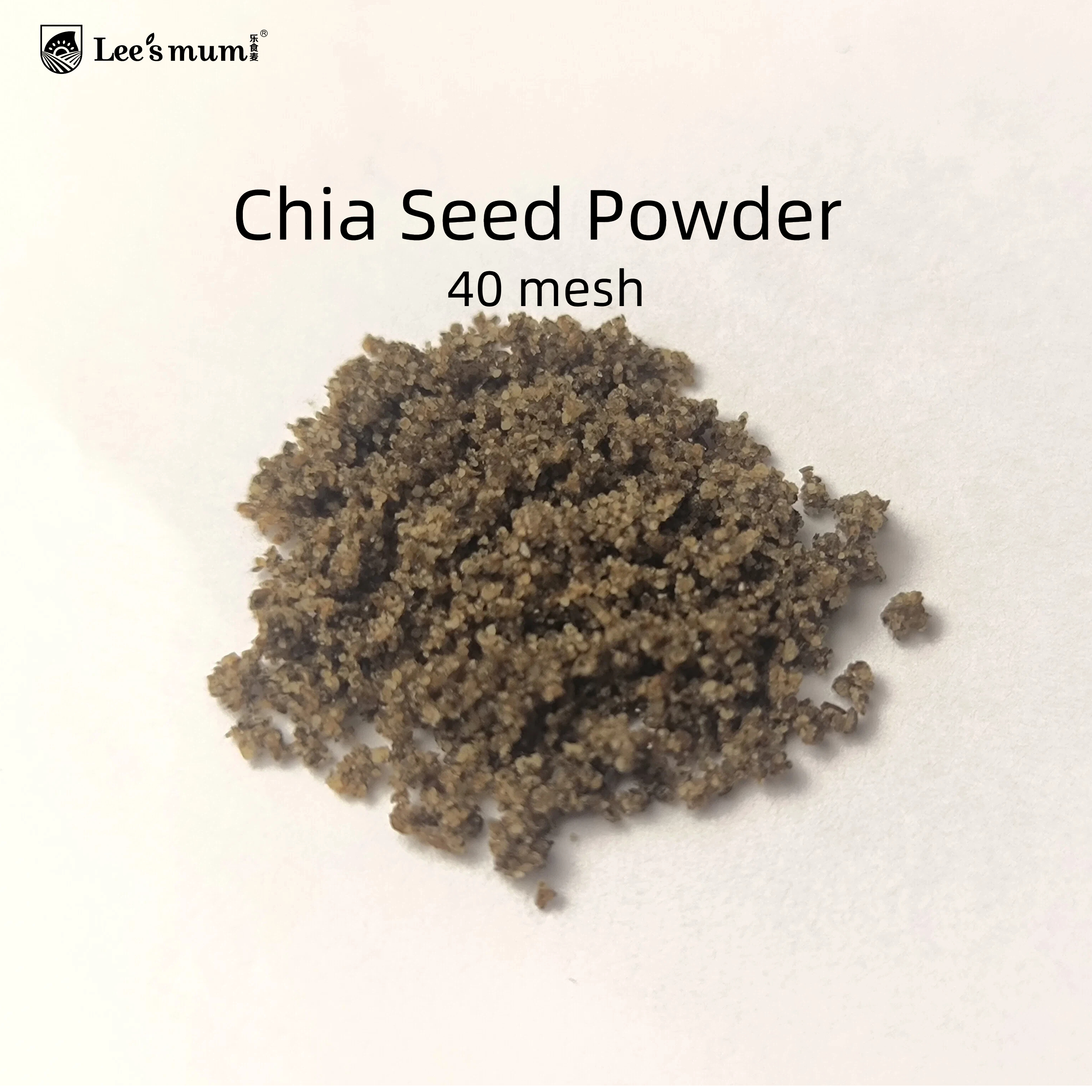
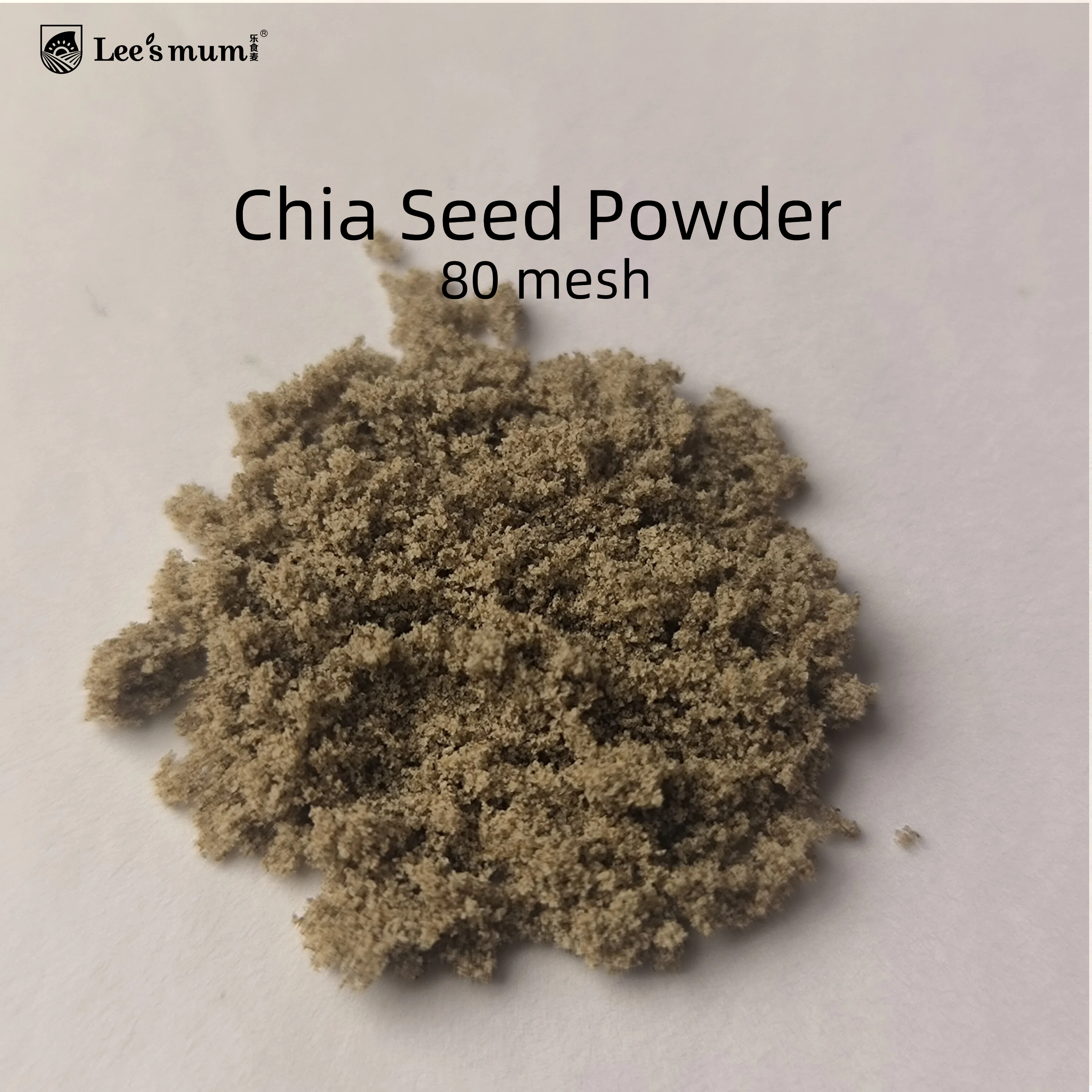
A: Particle size determines how chia seed powder hydrates, feels in the mouth, and appears in the final product, directly impacting consumer acceptance and product positioning.
Q3: How does chia seed powder differ from whole chia seeds in product development?
A: Unlike whole seeds, chia seed powder allows controlled texture, consistent processing, and easier integration into existing formulations without visual or sensory disruption.
Q4: Which chia seed powder mesh size is best for bakery applications?
A:
-
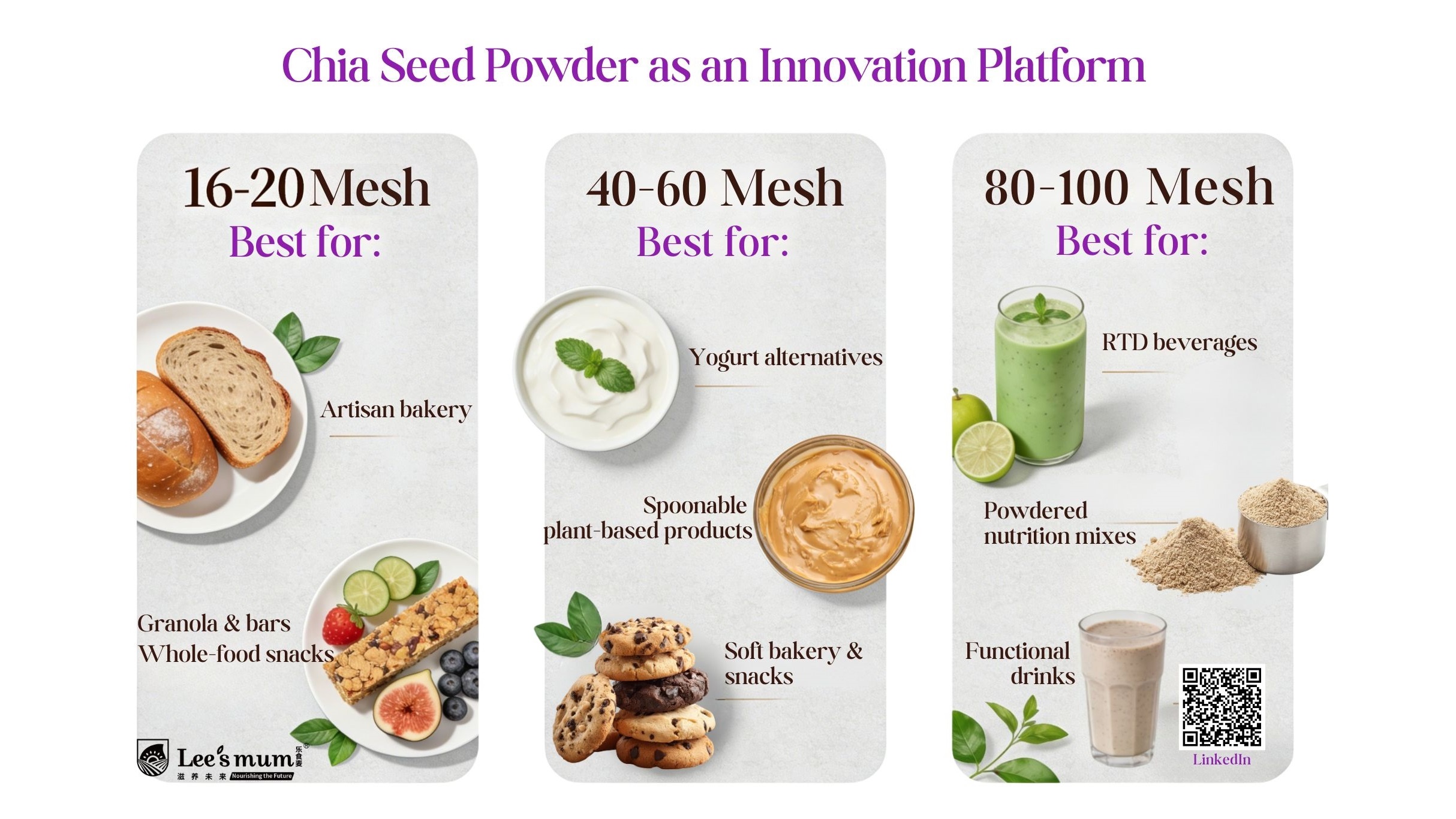
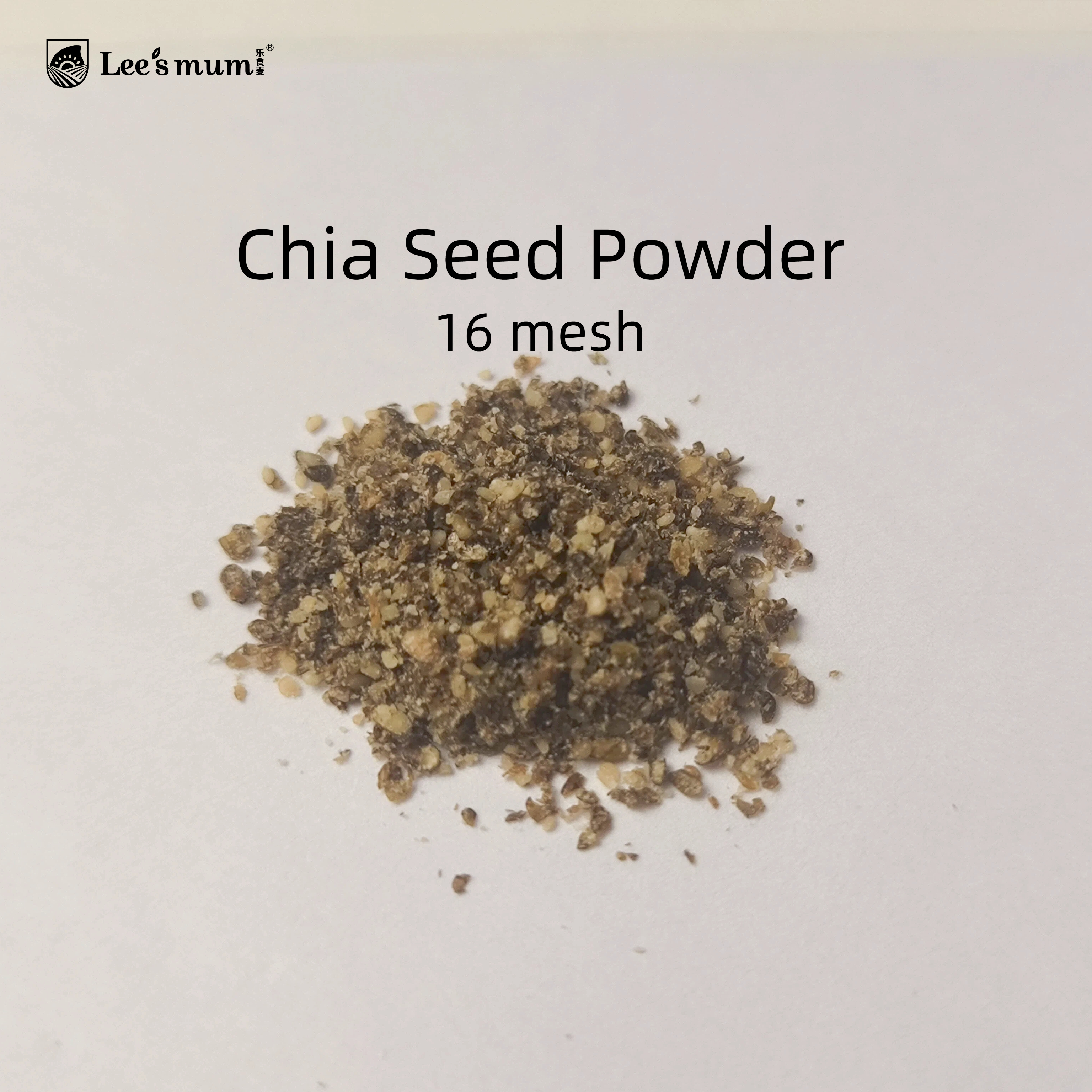
16–20 mesh is ideal for artisan bakery, granola, and bars where visible structure and “seed-forward” positioning are desired.
-
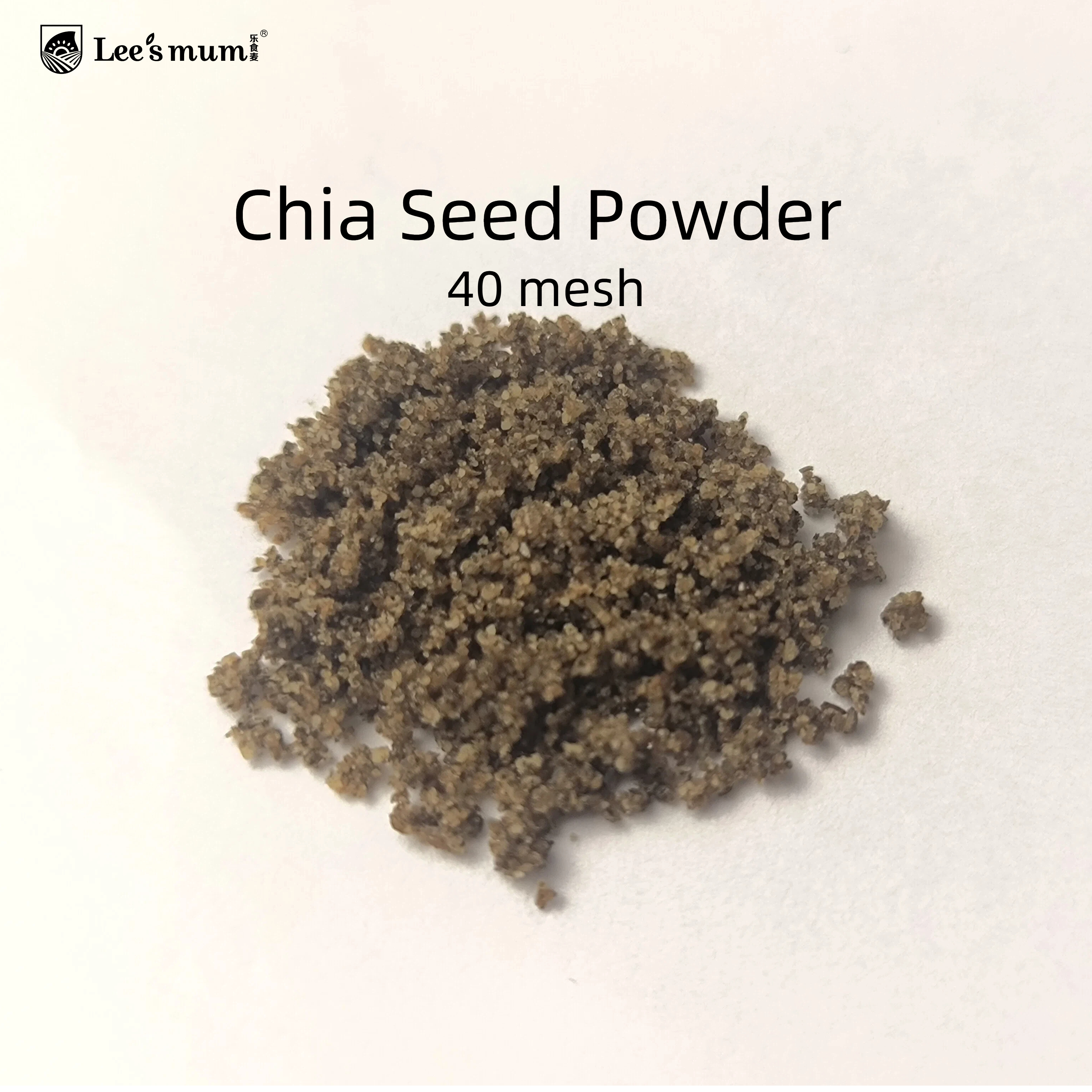
40–60 mesh works better for soft bakery products needing smoother texture.
Q5: What mesh size of chia seed powder is suitable for yogurt and plant-based dairy alternatives?
A: 40–60 meshchia seed powder offers a balance between fiber functionality and smooth mouthfeel, making it suitable for spoonable products like yogurt alternatives and plant-based desserts.
Q6: Can chia seed powder be used in RTD beverages without causing grittiness?
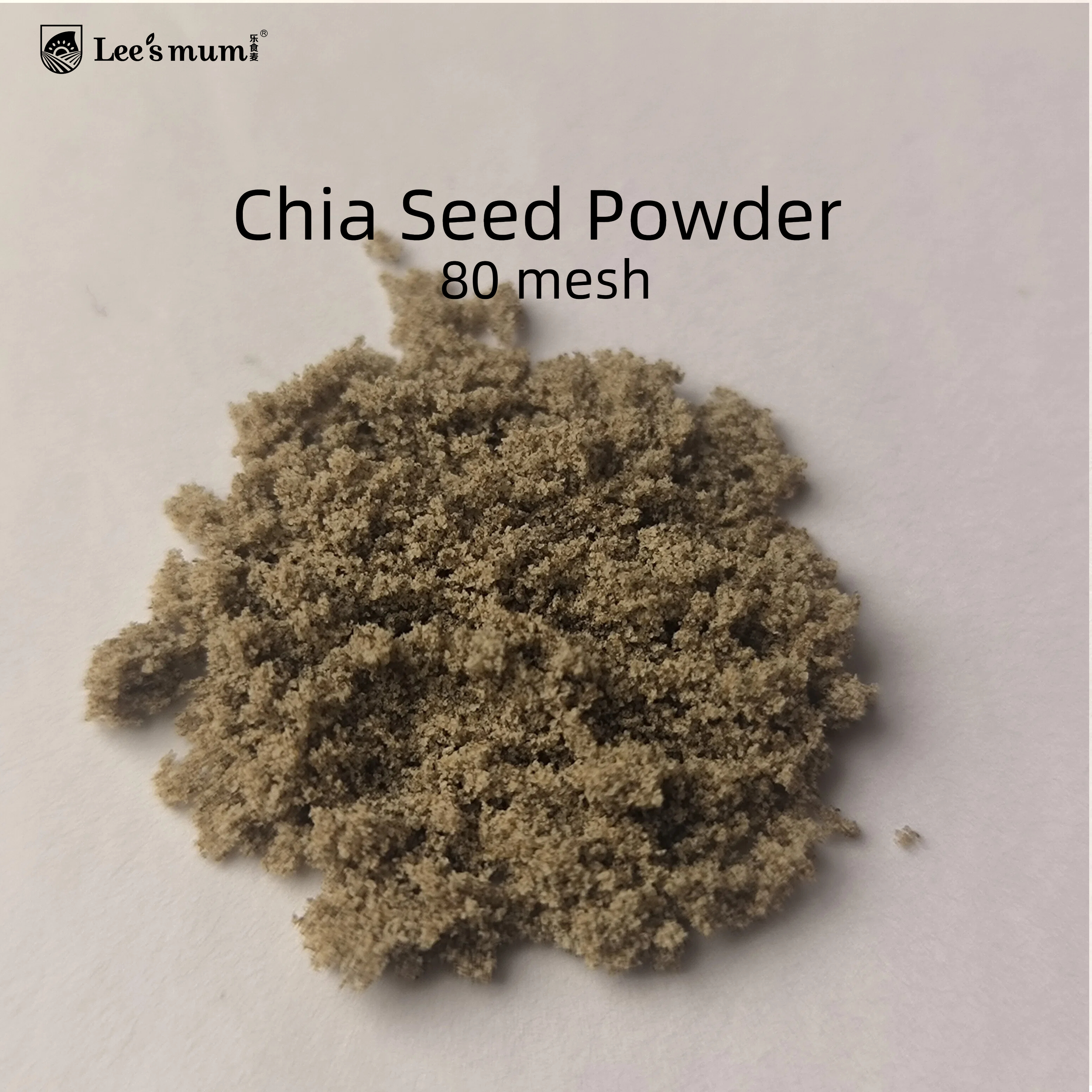
A: Yes. 80–100 mesh chia seed powder enables fiber fortification with minimal sensory impact, making it suitable for RTD beverages, functional drinks, and powdered drink mixes.
Q7: What is the best chia seed powder particle size for “invisible fibre” claims?
A: 80–100 mesh is best for “invisible fibre” concepts, as it allows nutritional enhancement without altering taste, appearance, or texture.
Q8: How do R&D teams choose the right chia seed powder mesh size?
A: R&D teams should consider three factors: target texture, liquid content, and processing conditions. Prototyping with different mesh sizes helps validate hydration behavior early.
Q9: Does chia seed powder support clean-label formulation strategies?
A: Yes. Chia seed powder is a natural, plant-origin fibre that aligns well with clean-label, additive-free, and minimally processed product positioning.
Q10: Can one chia seed powder ingredient support multiple product concepts?
A:Yes. Using different particle sizes allows one raw material to serve multiple innovation pathways, reducing formulation complexity and ingredient sourcing risk.
Q11: How does chia seed powder help reduce texture-related reformulation risk?
A: Particle size control allows developers to fine-tune mouthfeel early, reducing the risk of late-stage reformulation due to grittiness or instability.
Q12: Is chia seed powder suitable for food and beverage applications?
A: Yes. Chia seed powder is widely accepted in food formulations and fits current trends toward plant-based, fiber-enriched, and clean-label products.
Q13: Can suppliers provide multiple particle sizes for R&D testing?
A: Professional suppliers can offer multiple mesh options and sample support, allowing R&D teams to test functionality across different product formats.
Q14: Why is chia seed powder considered an “innovation platform” ingredient?
A: Because its functional behavior changes with particle size, chia seed powder enables multiple product concepts from a single ingredient, supporting faster and more flexible innovation.
Q15: How can R&D teams start testing chia seed powder in new formulations?
A: Start with small-scale trials using different mesh sizes, evaluate hydration and texture performance, and adjust based on target product format and processing conditions.
Q16: What is the recommended dosage of chia seed powder?
A: The recommended dosage is 1-2 tablespoons per day, added to smoothies or other foods, depending on your nutritional needs.
Q17: How many years of experience do you have in botanical powder production?